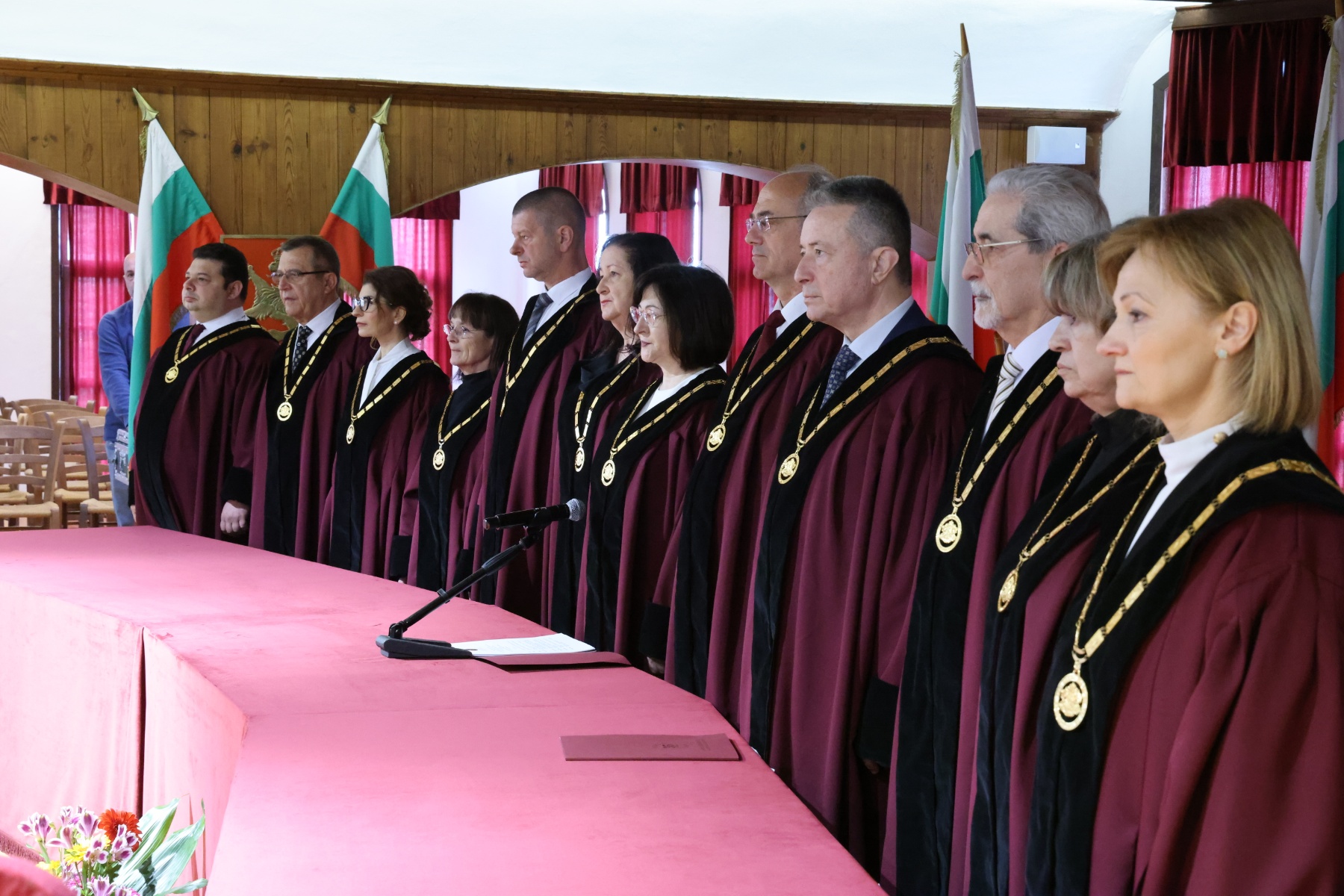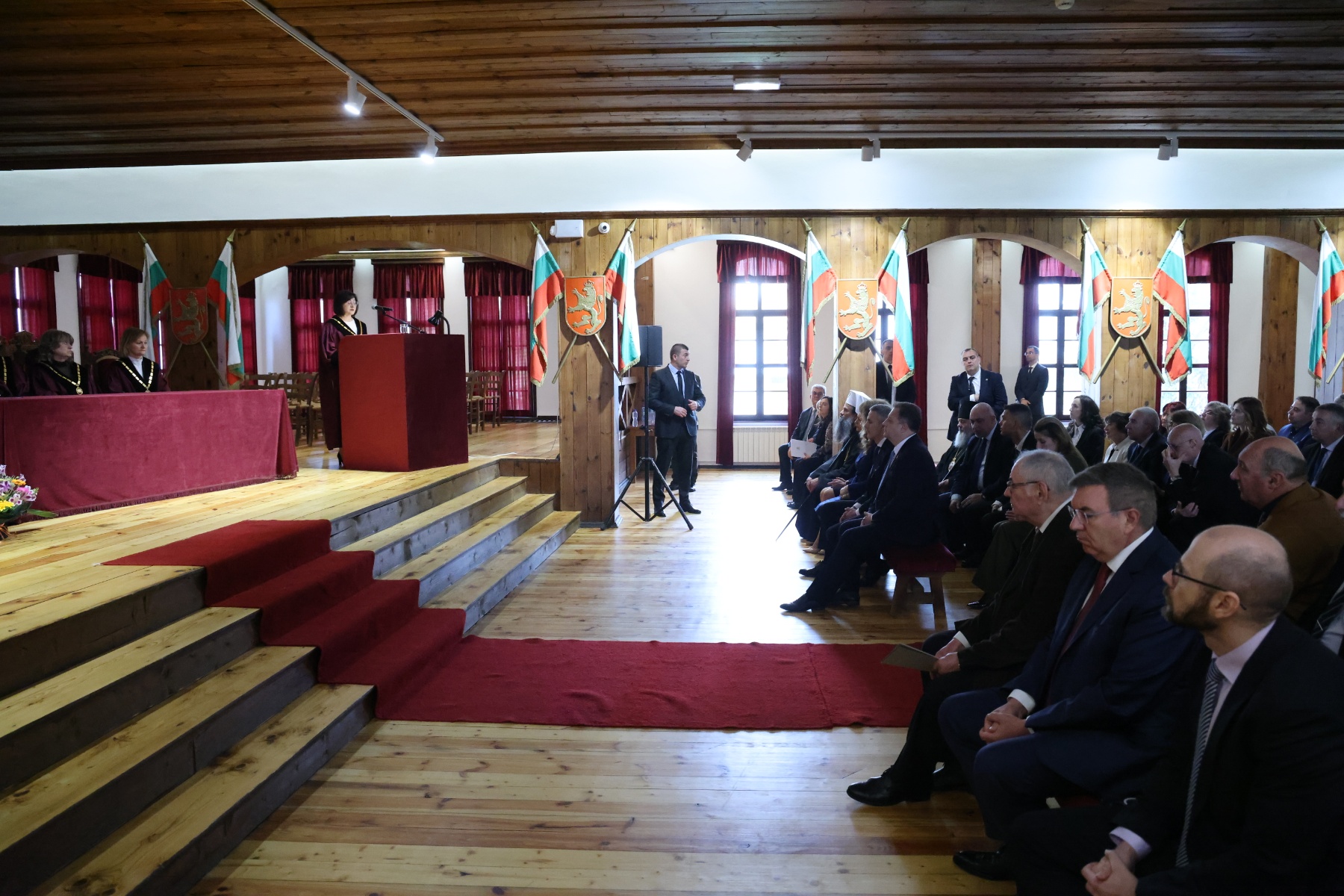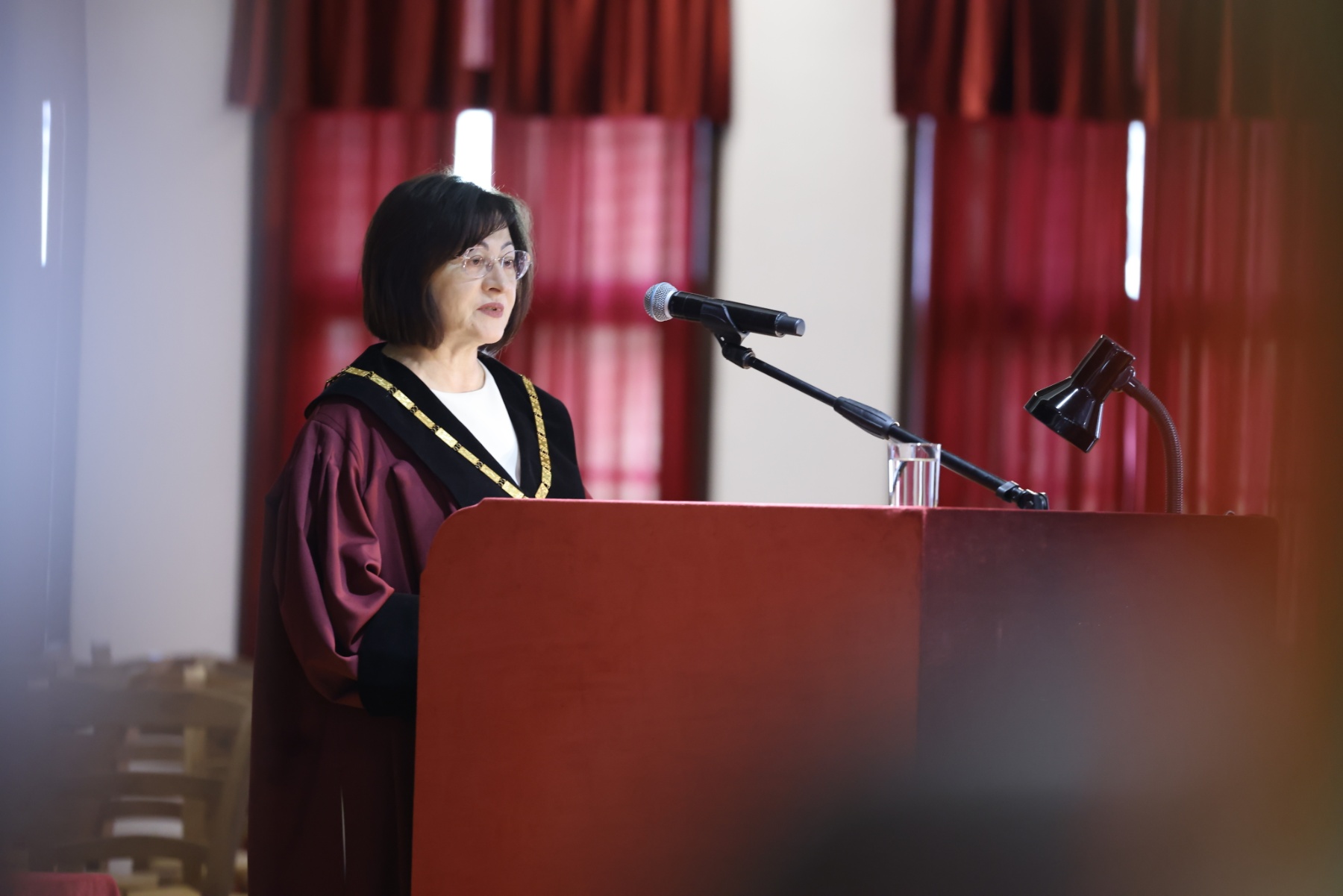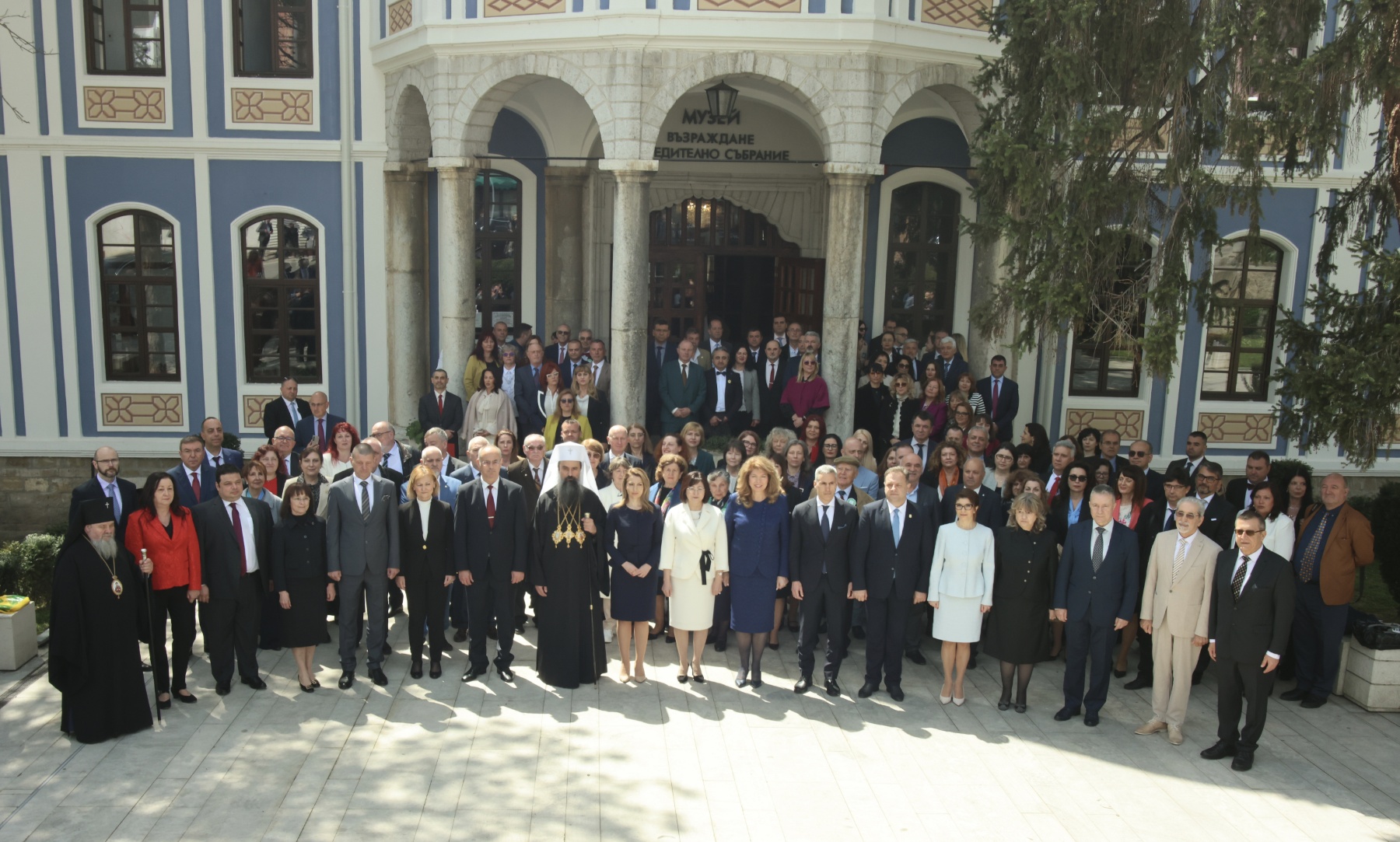
“This city—Veliko Tarnovo—and this hall—the venue of the Constituent Assembly—remind us of the origins of modern Bulgarian statehood. The 35-year history of the Constitutional Court shows us that this statehood can be defended and developed through the rule of law, not through force.” This was stated by Pavlina Panova, President of the Constitutional Court of the Republic of Bulgaria, at the opening of the celebrations marking the 35th anniversary of the institution’s establishment in Bulgaria.
With her address on Bulgarian Constitution Day in Veliko Tarnovo, Pavlina Panova opened a series of events with which the Court will mark its establishment in 1991. “35 years is enough time for the Constitutional Court to establish itself, and it does not follow the rhythm of the moment,” noted the President of the Court, adding: “Today is not just a cause for celebration. It is a reminder of the need for responsibility. Responsibility toward the rules and the law. Responsibility toward the text of the Constitution. Responsibility toward the citizens whose rights the Constitution protects. The responsibility of the Constitutional Court remains to uphold this order—with legal reasoning and impartiality.”
Among the official guests who delivered their greetings at the “Renaissance and Constituent Assembly” Museum, where the Tarnovo Constitution was adopted 147 years ago, were President of the Republic of Bulgaria Iliana Yotova, National Assembly Chair Raya Nazarian, and Prime Minister Andrey Gyurov.
In her address, President Iliana Iotova congratulated the members of the Constitutional Court, noting that it is the modern bearer of a remarkable tradition of statesmanship, public service, and the rule of law. “In times of chronic institutional crisis, such as the one we face today, it becomes abundantly clear that no law, including the Constitution, can function without its guardians. For 35 years now, this cause has been entrusted to the Constitutional Court of the Republic of Bulgaria, which is called upon to uphold and interpret the spirit and philosophy of the Bulgarian Constitution,” President Yotova stated.
In her address, President of the National Assembly Raya Nazaryan expressed words of appreciation to the Bulgarian constitutional judges. “Today, as we solemnly mark the anniversary of the establishment of the democratic constitutional order in our country, as we discuss the place and role of the Constitutional Court in a state governed by the rule of law, we can proudly say that this institution has met the expectations of society and of its founders,” she noted.
For his part, in his address, the Prime Minister of the Republic of Bulgaria, Andrey Gyurov, expressed hope that when there are decisions that may be subject to criticism, “the Constitutional Court will continue to live up to its mission and responsibility, because without such a guarantor, a state can easily take paths that have nothing to do with the ideals of the National Revival, nor with the hopes for freedom and democracy that marked the period after November 10, 1989” .
Greetings during the forum on Bulgarian Constitution Day were also extended by His Holiness the Bulgarian Patriarch and Metropolitan of Sofia Daniel, as well as by the mayor of Veliko Tarnovo Municipality, Dr. Eng. Daniel Panov, the president of the Supreme Court of Cassation Galina Zakharova, Judge Mario Dimitrov, Chair of the Third Division of the Supreme Administrative Court, on behalf of the SAC, the Chair of the Supreme Bar Council, Attorney Stefan Marchev, the Ombudsman of the Republic of Bulgaria, Velislava Delcheva, and the Chair of the Union of Jurists in Bulgaria, Vladislav Slavov.
The event continued with a presentation by Prof. Milcho Palangurski, Ph.D., from the Institute of Historical Research – Bulgarian Academy of Sciences. With his topic “Constitutionalism and the Constitutional Order,” he focused on the history and development of the Constitution and the Constitutional Court in Bulgaria. “As historians, we look at how long an institution has survived. Thirty-five years is longer than the second and third constitutions. That is a very long period. I am not aware of anyone having challenged the Constitutional Court on grounds of inappropriateness, impracticability, or situations in which it distorts our fundamental constitutional order and system,” said Prof. Palangurski.
The conference continued with the report “Memories of the Beginning” by Prof. Pencho Penev, former Minister of Justice, deputy to the 7th Grand National Assembly, and judge on the first panel of the Constitutional Court of the Republic of Bulgaria. “I see representatives of Bulgaria’s highest institutions gathered in one place. From the three branches of government, plus the President. There is no higher praise for the work of the Constitutional Court than this,” he noted. In his presentation, Prof. Penev noted that from its first panel to the present day, the Constitutional Court has fulfilled its unchanging mission and, through its practice, has become an indispensable factor in Bulgarian democracy and Bulgarian constitutionalism.
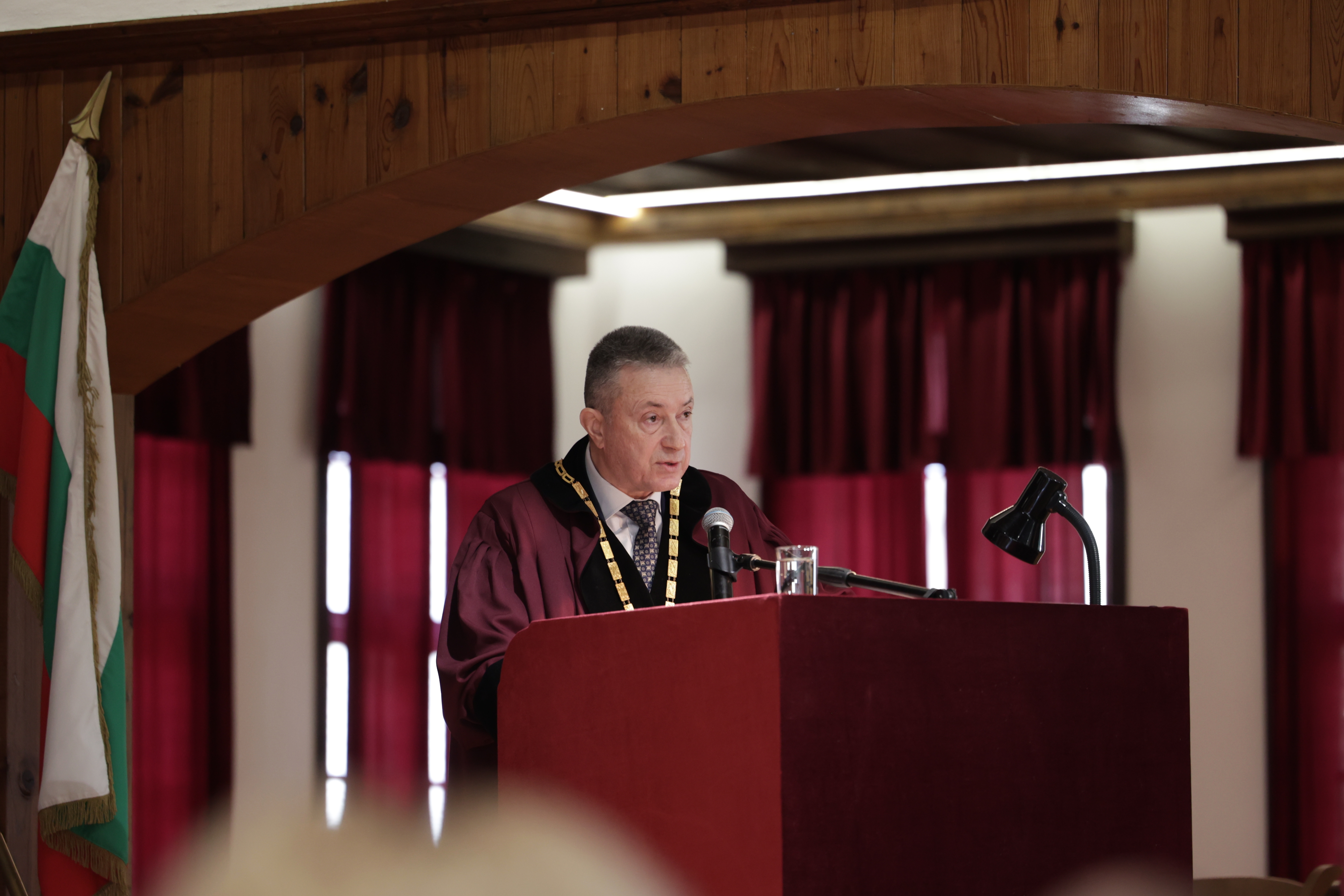
The third presentation—part of the program for the commemorative ceremony—was delivered by Constitutional Court Judge Prof. Yanaki Stoilov, who also served as secretary of the Constitutional Commission in the Seventh Grand National Assembly. He explored the topic “The Constitution Between the Ideal and the Real” and noted that the role of the Constitution is, above all, to establish normative foundations and delineate the limits of state power. “The enforcement of the Constitutional Court’s decisions depends to a large extent on the constitutional climate and on what we call a sense of justice, especially the sense of justice and the will of those who apply the law. The Constitution is real when it is applied and defended. That is why we are called upon to uphold constitutionalism by defending the Constitution,” noted Prof. Yanaki Stoilov.