The year 2026 marks the thirty-fifth anniversary of the establishment of the state institution and the emergence of an entirely new constitutional and legal culture
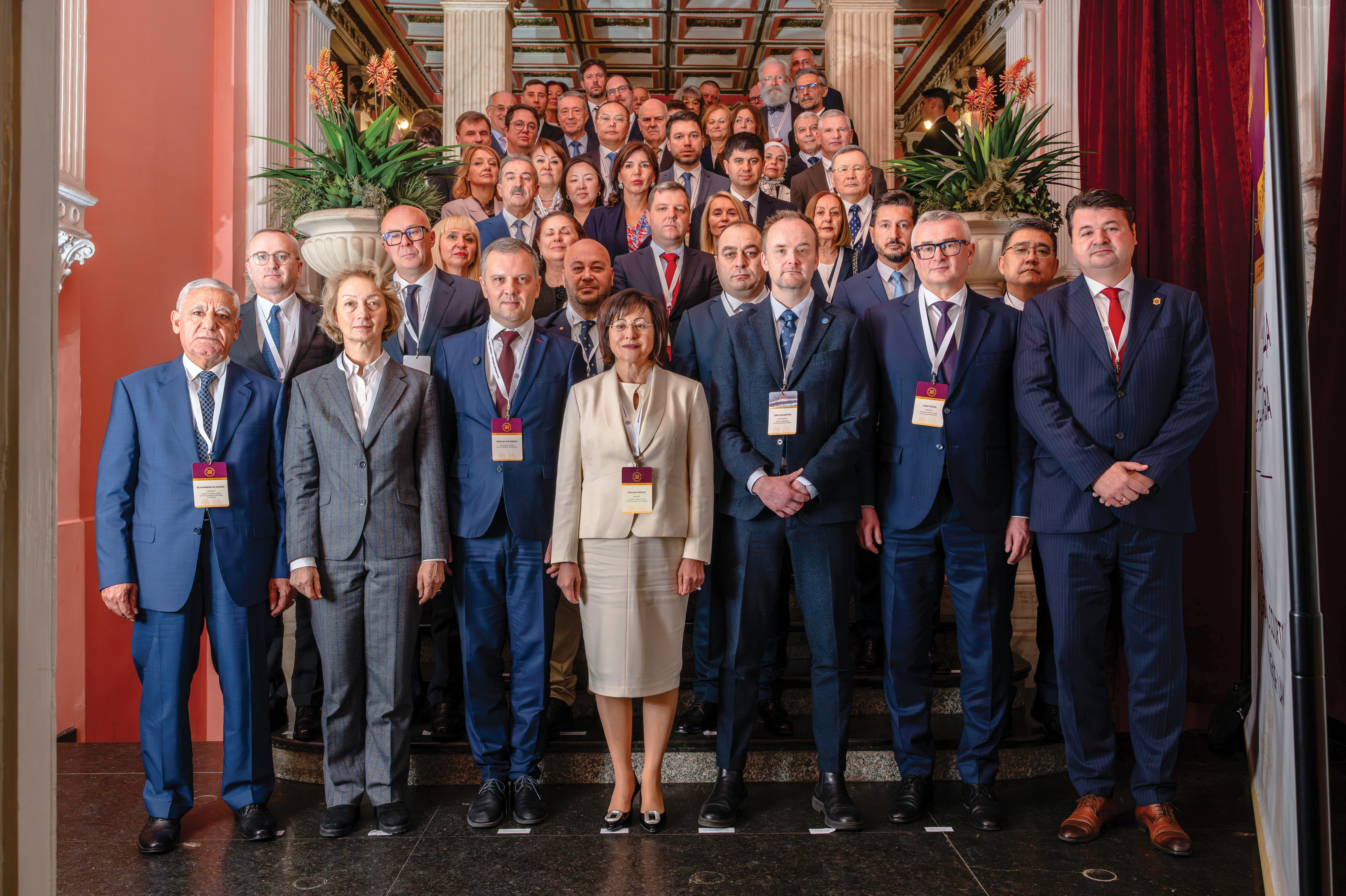
The Constitutional Court is the institution empowered to ensure stability when political dynamics may create tension. Under its protection, the principles of constitutional liberal democracy, as enshrined in the Constitution, take effect and begin to shape the Bulgarian legal landscape. This was stated by the President of the Constitutional Court of the Republic of Bulgaria Pavlina Panova at the opening of the concluding international conference “The Role of Constitutional Courts in Guaranteeing the Rule of Law” dedicated to the 35th anniversary of the institution’s establishment in Bulgaria. The forum brought together in Sofia official representatives and delegations from 31 countries in Europe, Asia, and Africa.
The establishment of constitutional courts serves as a reminder that democracy is not the unlimited power of the majority, but rather governance within a legally established framework, Pavlina Panova further noted in her speech, adding that the Constitutional Court has contributed to the development of a constitutional culture in Bulgaria since its establishment in 1991.
In his remarks, Minister of Justice Nikolay Naydenov emphasized that over the past 35 years, the Court has repeatedly served as an arbiter between the branches of government, and in times of political tension and constitutional challenges, its decisions have provided a balance and served as a safeguard for the preservation of the state.
In his official remarks, Eirik Holmøyvik, Vice-President of the Venice Commission, highlighted the vital role and great responsibility of the Constitutional Court in safeguarding the Rule of law, democracy, and human rights in Bulgaria. In Sofia, he emphasized the importance of the Bulgarian Constitutional Court for the Rule of law, both within the country and beyond its borders, as part of the network of independent constitutional courts within the European Union’s legal system.
Koen Lenaerts, President of the Court of Justice of the European Union, and Mattias Guyomar, President of the European Court of Human Rights, marked the anniversary of the Bulgarian Constitutional Court in special video messages.
Alexander Kornezov, Judge of the Court of Justice of the European Union, Mariyana Kancheva, Judge of the General Court, Court of Justice of the European, speaking on behalf of Savvas Papasavvas, President of the General Court of the European Union, and Diana Kovatcheva, Judge of the European Court of Human Rights, offered their greetings during the opening of the conference.
The international forum – part of the events with which the Constitutional Court marked its anniversary in 2026 – focused on the challenges facing the rule of law and the role of constitutional courts in safeguarding it. These issues were examined along three lines of inquiry, which also served as the main themes of the conference’s working panels.
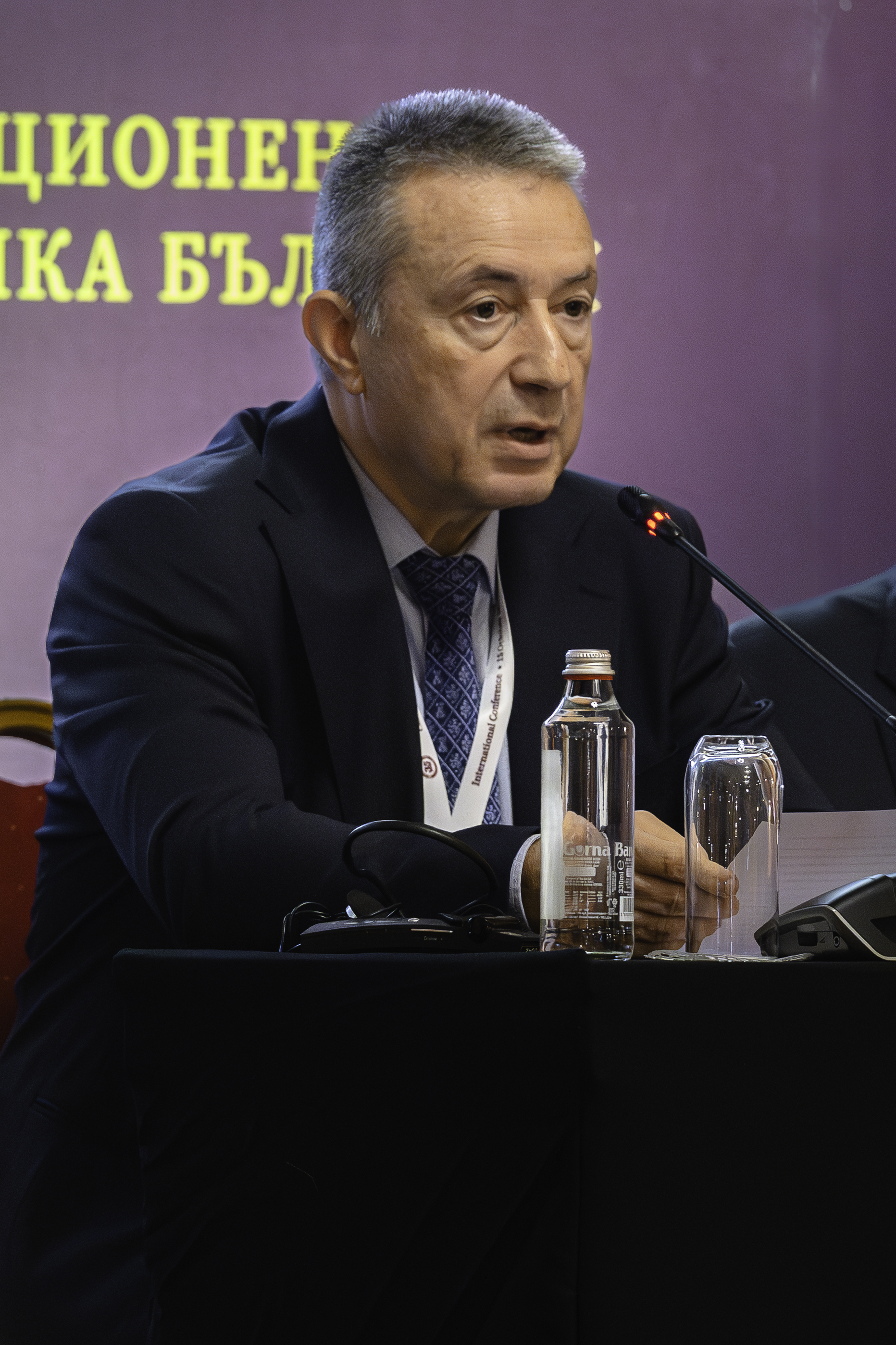
The first of these, moderated by Constitutional Court Judge Prof. Yanaki Stoilov, was devoted to the independence of constitutional courts.
Günter Spinner, Judge of the Federal Constitutional Court of Germany, noted that the future will depend not only on the rules – whether constitutional or not – but also on public trust in the institution.
Elena-Simina Tănăsescu, President of the Constitutional Court of Romania, emphasized respect for the rule of law, which cannot be reduced to the formal provisions of the Constitution and the law, but also requires constitutionally sound conduct and mutual respect among institutions.
Danny Pieters, Judge (NL) of the Constitutional Court of Belgium, noted that the institution’s impartiality is guaranteed to a significant extent by the balanced representation of various political currents and that individual judges are expected to demonstrate absolute personal impartiality.
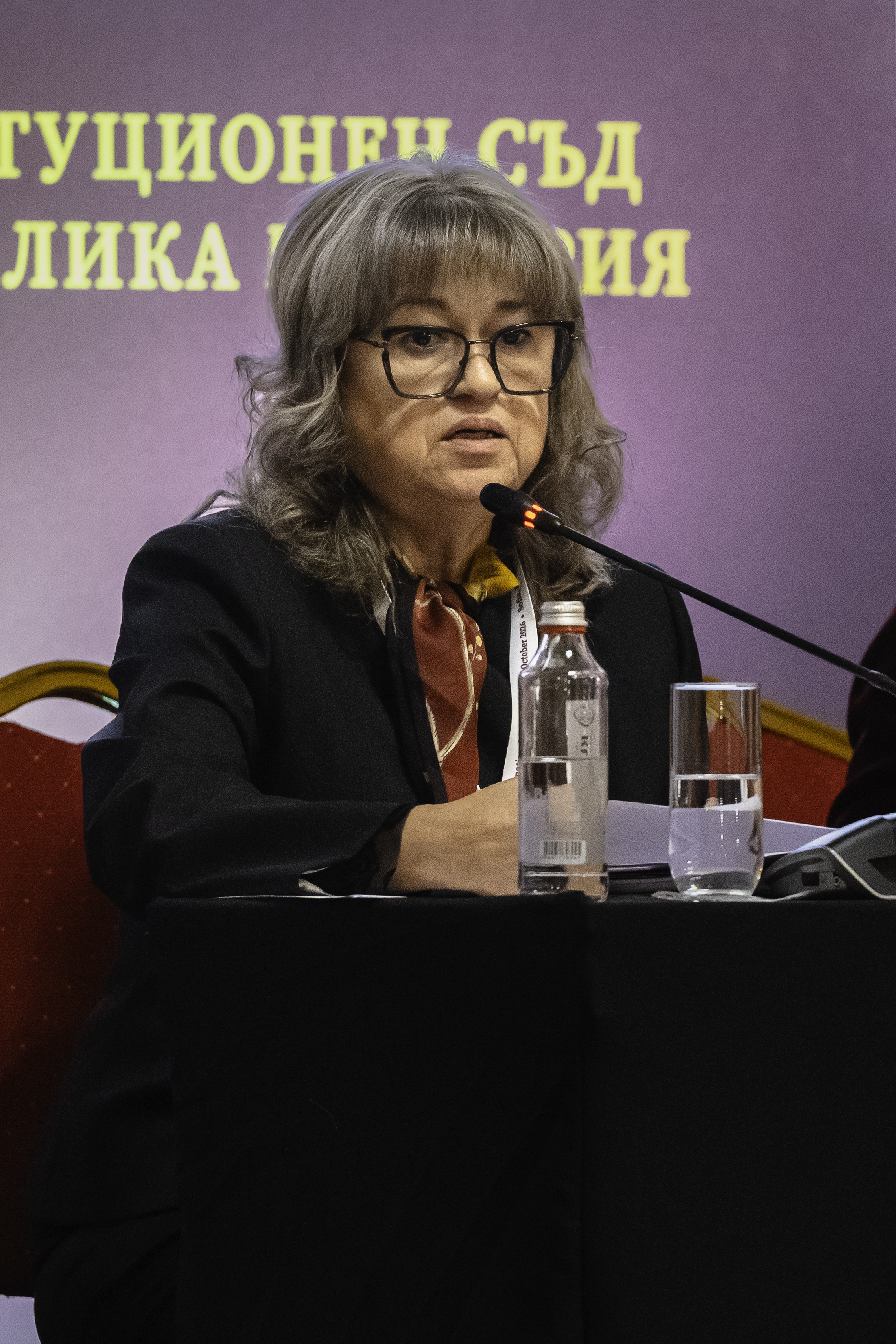
The second panel, „Respect for and Compliance with the Decisions of the Constitutional Court“ was moderated by Constitutional Court Judge Galina Toneva.
Emanuela Navarretta, Judge of the Constitutional Court of the Italian Republic, noted that the institution is refining the tools at its disposal with a view to effectively safeguarding constitutional principles and ensuring loyal cooperation with Parliament and the ordinary courts.
Genti Ibrahimi, Judge of the Constitutional Court of the Republic of Albania, added that the Constitution does not exist in a vacuum but is intricately linked to the society it seeks to govern.
Miloš Maďar, Judge of the Constitutional Court of the Slovak Republic, emphasized that without respect for the principles of the rule of law, democracy, and fundamental rights, the constitution or international treaty on which the courts’ powers are formally based is nothing more than a piece of paper.
Ronald Faber, Substitute member of the Constitutional Court of Austria, Judge at the Supreme Administrative Court of Austria, presented the Austrian constitutional model.
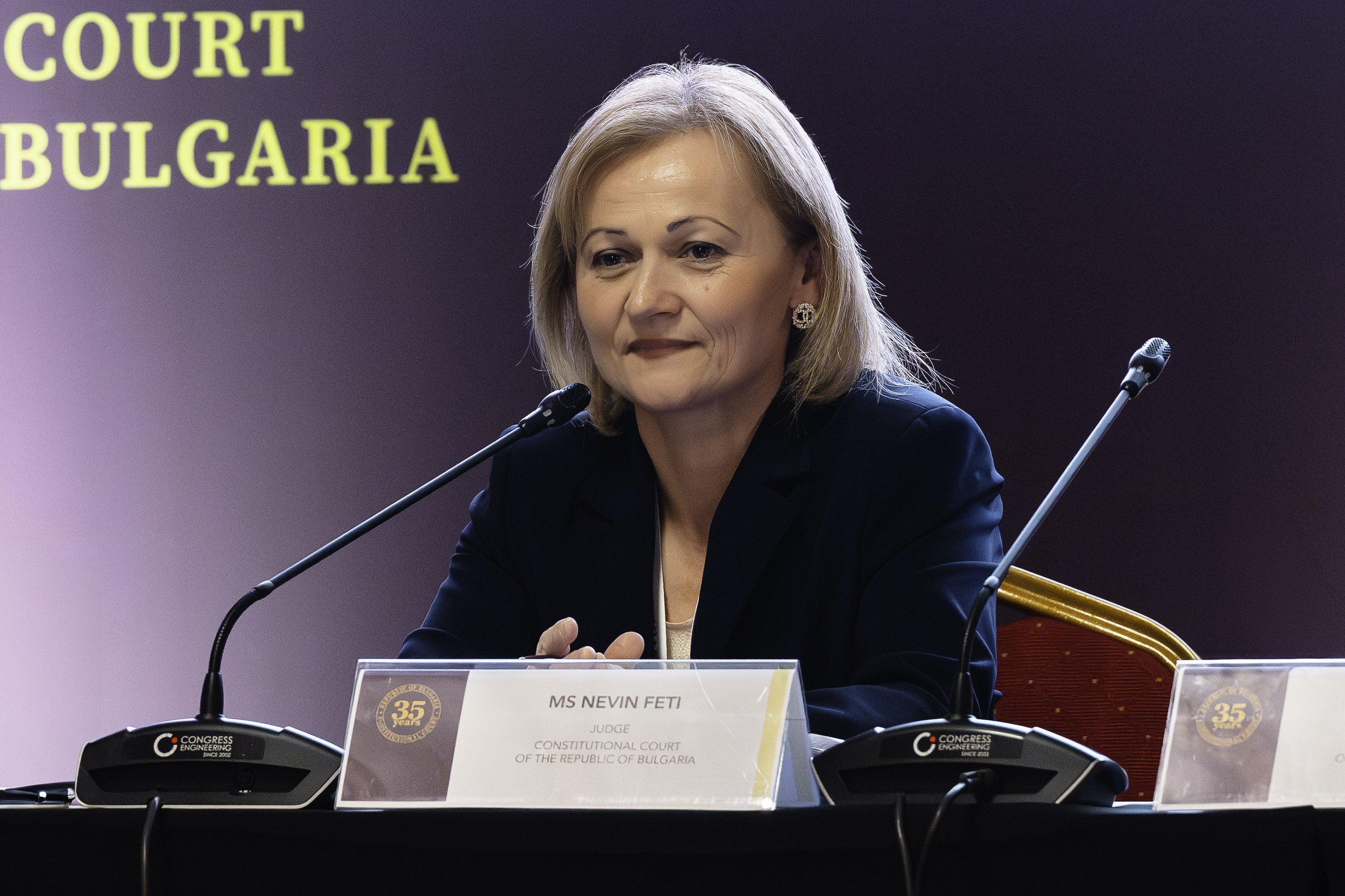
The third panel, “Case Law of Constitutional Courts in Crisis Situations” was moderated by Constitutional Court Judge Nevin Feti.
In her presentation, Katja Šugman Stubbs, Judge of the Constitutional Court of the Republic of Slovenia, noted that in times of crisis, constitutional courts must set limits on the drive to excessively restrict constitutional rights.
Tomas Davulis, President of the Constitutional Court of the Republic of Lithuania, outlined the institution’s practice during various types of crises and noted that the Court manages to strike a fair balance between competing values, while constitutional doctrine continues to evolve.
András Patyi, Judge of the Constitutional Court of Hungary, presented his report on dilemmas in crisis situations and examples from the institution’s practice. He noted that in a state of emergency or crisis, there is no single constitutional solution.
In her presentation, Meergul Bobukeeva, Judge of the Constitutional Court of the Kyrgyz Republic, emphasized that under exceptional circumstances, expedited decisions by the institution are permissible, but there must be truly objective grounds for doing so.
During the conference, the Constitutional Court of Bulgaria signed memoranda of cooperation with the Constitutional Court of Mongolia and with the Constitutional Court of the Hashemite Kingdom of Jordan.